
Neurofeedback
Neurofeedback: Working with the Brain
One of the fascinating things about the mind is that we can understand ourselves extraordinarily well and still struggle to change how we feel. We can know that we are safe and still feel anxious. We can know that we need to sleep and find that the brain refuses to settle. We can understand the origins of a pattern and yet continue to experience it.
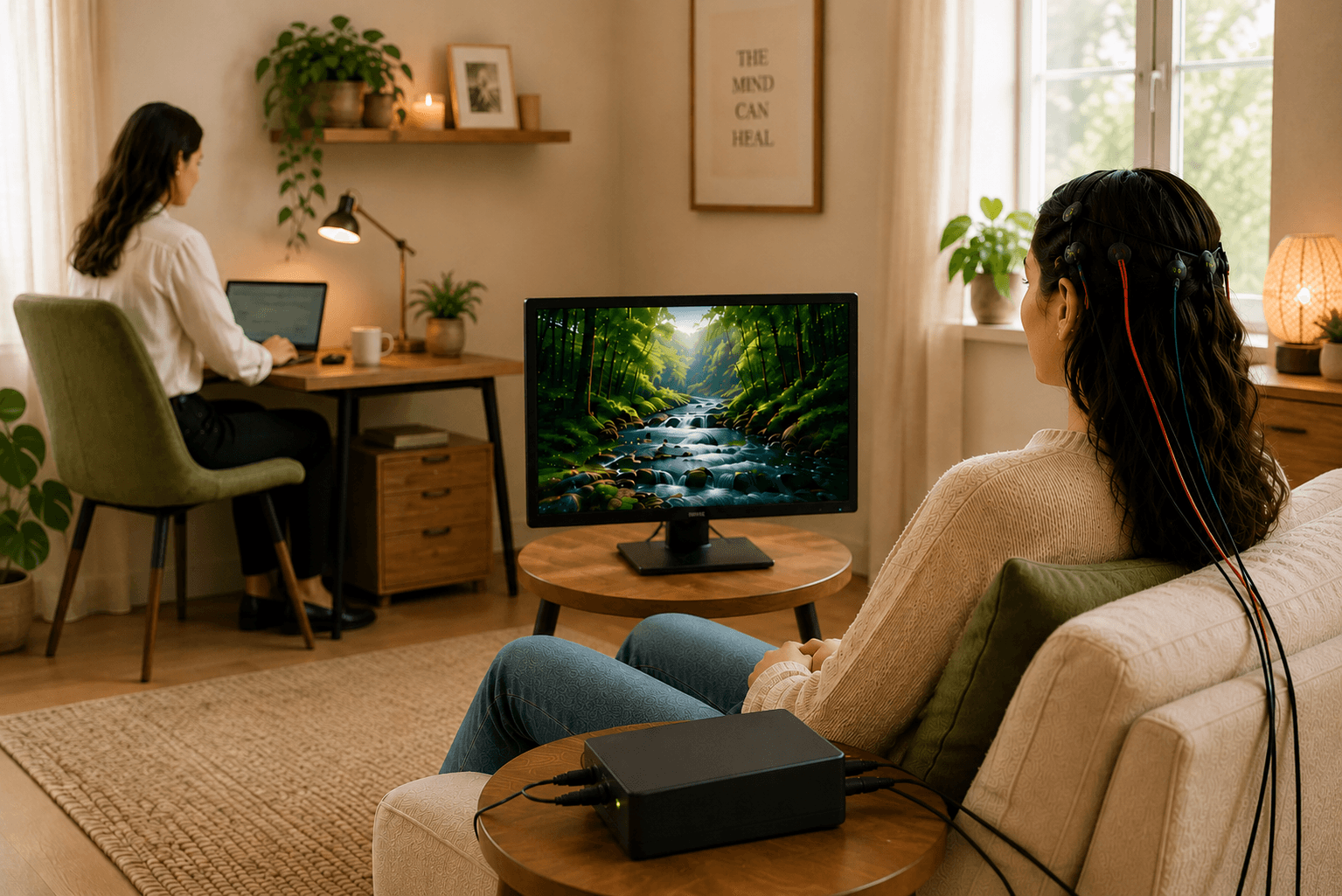
This is partly because not everything that happens within us is accessible through conscious thought. Neurofeedback gives us another way into the conversation.
Neurofeedback is a computer-assisted form of behavioural therapy designed to support regulation by providing the brain with information about its own activity in real time. Through visual, auditory and tactile feedback, the brain is able to receive information about what it is doing as it is doing it. Over time, this gives it an opportunity to become more flexible in the way it regulates itself.
There is no requirement to consciously control the process, nor to find the perfect words with which to describe what is happening. The brain receives the information and does something it is remarkably good at doing: it learns.
Why Regulation Matters
Our brains and nervous systems are continually responding to what is happening around and within us. Ideally, we are able to move flexibly between different states. We become alert when something requires our attention, focused when we need to concentrate, activated when we need energy and able to settle again when the demand has passed.
Sometimes that flexibility becomes more difficult. We can become stuck in states of heightened arousal, or struggle to generate enough activation when it is needed. This can make itself felt in sleep, concentration, emotional reactivity, stress tolerance, behaviour and the ability to recover after something difficult.
Neurofeedback isn’t about creating one permanently calm state. Life doesn’t require us to be permanently calm. It is about supporting flexibility — helping the brain become better able to move between states in a way that is appropriate to what is actually happening.
Regulation offers us the choice that trauma and adverse experience take from us. How we operate in the world, how we respond to stimuli, how we handle our circumstances, how we live, it’s all a choice.
However, we live from what we believe, and we develop belief through sensory experience, or through deeper, taught principles. Adverse experiences erode our ability to tap into our non-physical existence, as we will always prioritise keeping our body alive, and coping with our circumstances, over living with real joy and happiness. In this bind, we lose our ability to choose our responses, because our survival instinct will take the sensory information of lived experience and adapt to be able just to cope, and not much else.
So your choice becomes to fight, or to flee. Or to freeze, or to fawn. You don’t get to choose to take the leap of faith; to be scared but to do it anyway.
Regulation offers you the ability to come back to your right to make a conscious, peaceful choice. Yes, there may be some grief built into this if it isn’t the choice you were ever expecting to make, but a regulated brain can hold you through it all, and come out feeling ok on the other side. You’re not fighting anything, you’re not running from anything, you’re not frozen and unable to choose. You can creatively find ways of making the choices that you want for yourself; the more regulated you are, the more resilient you are, the more able you are to find a way to what you want.
Children, Parents & Neurofeedback
Working with children asks us to think slightly differently. Children don’t always have the language to explain what is happening internally — and nor should we expect them to. Their brains are developing, their environments are changing and their emotional lives are being negotiated alongside school, friendships, family relationships and all the ordinary complexities of growing up.
Neurofeedback can offer a useful route into regulation without requiring a child to explain everything first, but a child doesn’t exist in isolation. Where appropriate, I therefore encourage parents to engage with the wider process too, so that we can look not only at what is happening for the child, but at the environment around them and the ways in which everybody might be supported.
This isn’t about finding fault. It is about seeing the whole picture.
Neurofeedback & Psychotherapy
I don’t see neurofeedback as belonging in an entirely separate box from therapy. The reason I work multimodally is precisely because human difficulties rarely sit neatly within one system.
Sometimes there is an important story to understand. Sometimes there is a belief or relationship that needs exploring. Sometimes there is an old protective mechanism that has become overenthusiastic, and sometimes the nervous system simply needs a little help learning another way of responding.
For some clients, neurofeedback therefore sits alongside psychotherapy. For others, it may be the principal intervention. We can decide together what makes sense.

Practicalities
Neurofeedback takes place in person in Kensington, London. Because the work uses specialist equipment and relies on in-person feedback, neurofeedback cannot be done remotely.
If you are travelling to London, based internationally or dividing your time between countries, you are welcome to enquire and we can discuss what might be practically possible.